
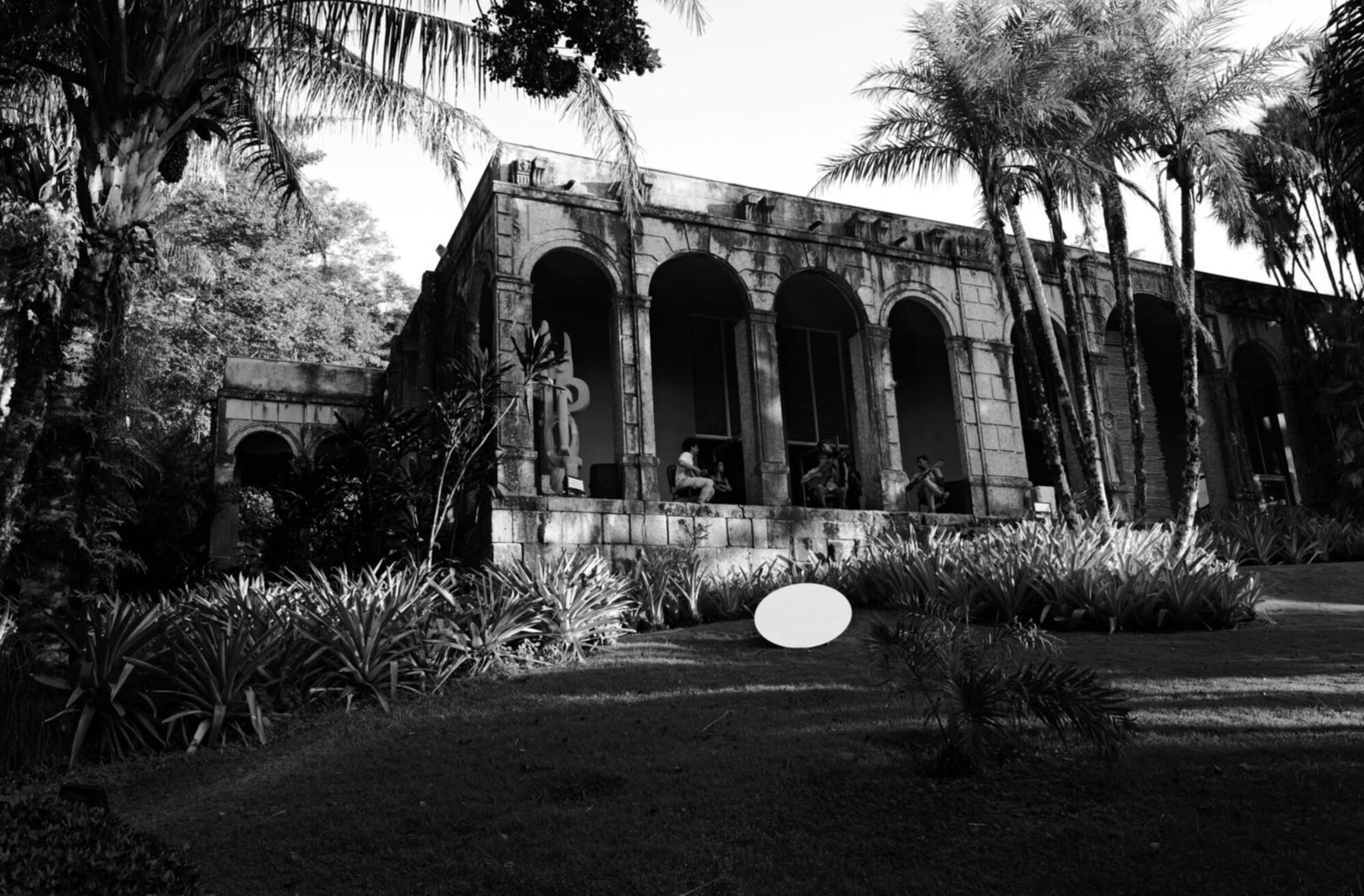
Saturday night ended in a ciranda. Everyone in the room, holding hands. Nobody planned it. That's what a space does when it's built right.
I think of spaces as something that has an effect, not just a backdrop. Burle Marx's sítio in Rio has been kept for decades, each gardener reinterpreting the original care without copying the form. That's not maintenance. It's proof that some things only survive through presence: people, in a place, at a specific moment.
I started reading The Disappearance of Rituals, about how we lost the ability to create encounters that don't scale, that can't be replicated because they were never meant to be. That's what we tried to build with Kunumi on Saturday: a space that would only exist once. That group, that light, musicians with no setlist, that table, that food. No agenda. Just presence.
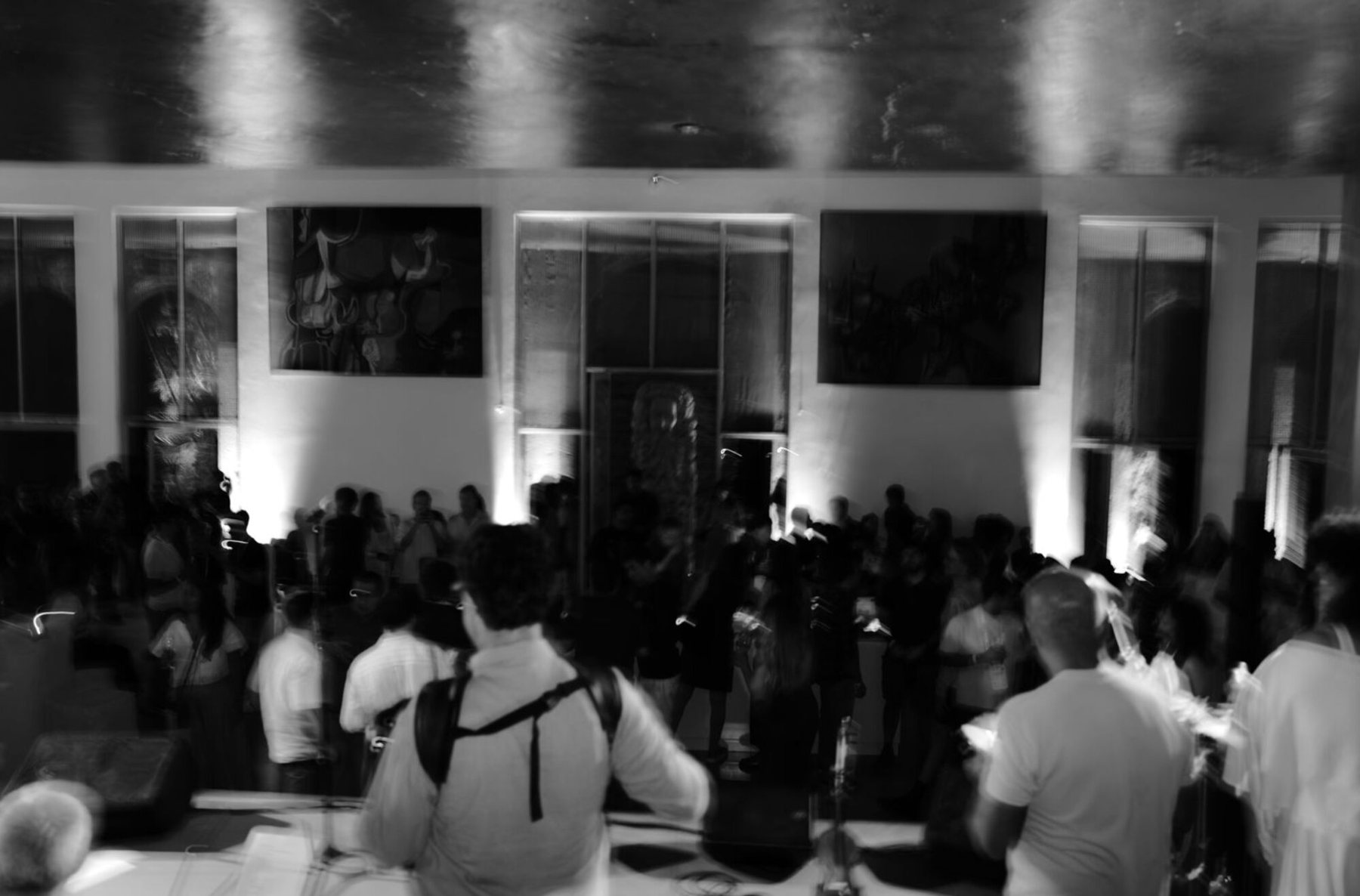
Nobody asked for the ciranda. It happened because everyone was actually there.
What I believe, and what I'm still learning
This part is harder to write. I lead culture at MATTER, and I've seen culture kill strategy more than once, in rooms I was in. Good deck, good plan. Then on a bad Tuesday someone senior tolerates exactly what the mission said we'd never tolerate, and that's what sticks as residue. Culture is what we tolerate, hire, promote, and deliver. The worst behavior we accept on a bad Tuesday is the culture, no matter what the mission says. A plan that isn't lived dies quietly, and takes the team's trust down with it.
I write this as someone who has also let a bad Tuesday slide, and I think that's the point.
Something we believe internally: machines today produce more than anyone can review. What's become scarce is the person who knows what deserves to exist and what should be discarded. But critical judgment is built by making, by showing work that isn't finished yet, by arguing for it up close, until the day the decision is yours, and so is the accountability. And it's built in public: taste formed alone still isn't taste. Being wrong out loud is part of it, and staying accessible afterward is too.
What this area is
Its job is formation. And the KPI is: people growing until the house can reproduce its own leaders without the founders in the room. Every future studio lead should trace back to something we ran. It's a real working function, with a charter, budget, calendar, a number attached. Own the review before anything else.
The most frequent cultural event here is a critique: rough work early, the newest person speaking before the loudest voice, mistakes treated as data, room made for a strange idea before a framework. If there's one ritual we shape carefully, it's this one, because it touches the work every day.
One test for any initiative: does it form the people involved and build something beyond them, both at once? Just one of the two is training or marketing. Worth doing sometimes, but it's not culture work.
Be in the room for hiring, promotion, and departures. The house reads those moments in a way it never reads a values deck. The decision stays with the leader. Reading what it teaches everyone else is our job.
Some limits, so this doesn't become HR with better branding: we're not payroll, and we're not a complaints channel. Discomfort goes through the management chain, or we lose the standing to ask people to grow. And we only pass on what the partners have already resolved. Anything that arrives ambiguous goes back up. That refusal is also a service.
What the general channel says when nobody's writing doctrine
I went back through our Slack before writing this, looking for the culture rather than the values. It's in the small print: a birthday message calling someone "the friendliest friend among all the friends we make at work." A goodbye note saying "the human side of this industry isn't a myth, it actually exists." A baby announced on a Monday as a Matter baby. A playlist series where each edition is a short portrait of whoever made it: twenty tracks and a text, curated by anyone who raises a hand. A feedback pilot where every note is signed, developmental, confidential, because growth needs a name attached.
And the pauses. Twice a year the studios stop: a play in New York, a dinner in São Paulo, a night at a garden in Rio. No agenda. We cancel that week's town hall, because the point of the pause is being in the same place at the same time. Nobody wrote a policy for any of this. It's what people do here when they think nobody's watching, the only definition of culture I trust.
The measure
We've built brands inside industries that move fast: beauty taught us to build intimacy at scale, entertainment taught us to hold attention without chasing it, tech taught us the cost of execution: it either lands and lives, or it doesn't and disappears. Weight over visibility. Authorship over identity. Resonance over performance. Growth is a by-product.
Does it stay? If not, it doesn't matter.
That's what happens when a brand stops trying to impress and starts living with people: in their language, their rituals, their playlists. And that's what happens inside a company when values leave the deck and become a function.
The real measure is quiet: sessions run by people who aren't founders, decisions made without asking permission upward, talent arriving because of what they saw from outside. If writing this down feels redundant, it worked.
This is my best draft so far, and parts of it are wrong in ways only you can see. Bring the disagreement into the room, not after. Tell me where this should go that I haven't seen.
Saturday, nobody planned the ciranda. Somebody built the room. That's the job.